Hämta utskrifter i skrivaren
För att få ut din utskrift måste du logga in på skrivaren och aktivera utskriften – först då börjar skrivaren att bearbeta din utskrift.
Så hämtar du utskrifter
Vill du byta språk på skrivaren gör du det genom att trycka på den grå rutan med figurliknande cirklar på, bredvid Högskolans logotyp.
- Logga in på skrivaren
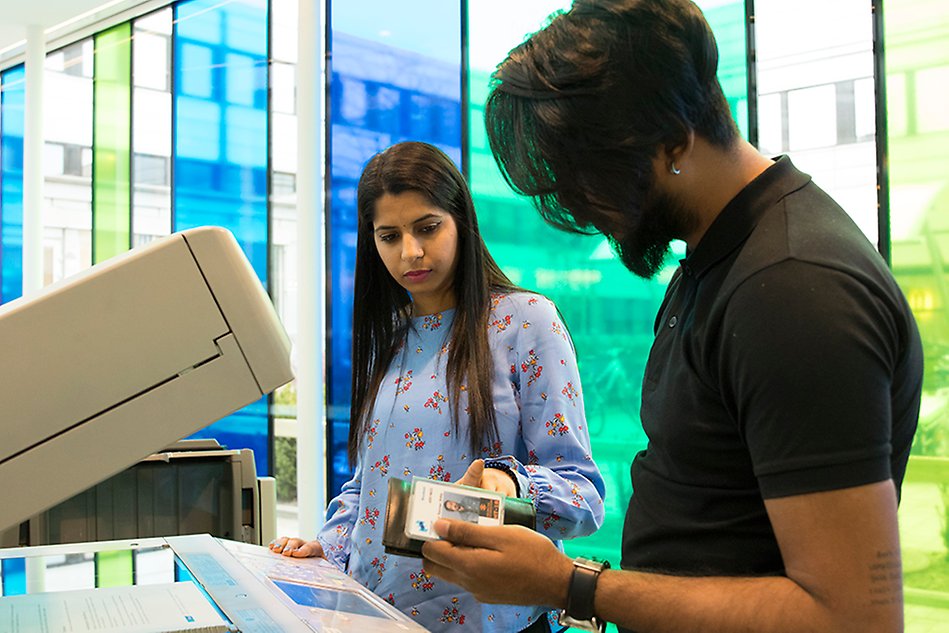
- Lägg ditt passerkort på skrivaren (längst till vänster på bilden ovan) och knappa in din passerkortskod på knappsatsen på skrivaren, eller
- tryck på AD Login och logga in med ditt studentkonto på skrivarens skärm.
- Välj Secure print om du skriver ut från en högskoledator eller egen enhet
- Markera filnamnet för den utskrift du vill skriva ut i listan (den senaste filen ligger längst ned).
- Välj färgutskrift, enkel- eller dubbelsidigt, häftning eller hålslagning av din utskrift (finns under Options).
- Välj Print+Delete. Den köade utskriften skickas till skrivaren och pengarna dras då från ditt konto.
- Det sker ingen debitering om du tar bort utskriften via Delete-knappen eller om du inte hämtar din köade utskriften inom tolv timmar.
- Välj Åtkomst lagr.filer om du skriver ut från usb. (Filen måste vara i filformatet pdf, tiff eller jpg.)
- Sätt in usb-stickan i kontakten till höger om knappsatsen.
- Välj Åtkomst lagr. filer.
- Markera filnamnet för den utskrift du vill skriva ut i listan (den senaste filen ligger längst ned).
- Välj färgutskrift, enkel- eller dubbelsidigt, häftning eller hålslagning av din utskrift.
- Välj Print. Utskriften skickas till skrivaren och debitering sker.