 English
Workshop on Explainable AI for Healthcare (WEAH)
Workshop on Explainable AI for Healthcare (WEAH) is a one-day workshop co-located with FLICS 2026 in Valencia, Spain (9–12 June 2026). The exact workshop day will be announced with the FLICS workshop schedule.
Practical information
Dates: 9–12 June 2026
Location: Valencia, Spain
Content: one-day workshop hosted by Halmstad University co-located with FLICS 2026
Important dates (in sync with FLICS 2026)
Workshop Paper Submission, 28 April, 2026
Paper Notification, 5 May, 2026
Camera-Ready Submission, 15 May, 2026
Scope and objectives
As applications of machine learning are being adopted into healthcare settings and evaluated by clinicians the need for interpretable and explainable machine learning models arises. These requirements for transparent models and decision support increase as many predictive models in healthcare are based on time-series data making the task of explainability challenging.
Moreover, these time-series are often nonuniformly sampled or consisting of sparse events as in log-based data, including hospital visits from electronic health records (EHR) where the data modality changes depending on the type of visits.
To address these challenges The full-day Workshop on Explainable AI for Healthcare (WEAH) welcomes contributions in the domain of explainable AI for healthcare applications including clinical, primary, specialised and care in the home.
WEAH aims to bridge theory and practice by discussing novel algorithms and experiments. Especially we invite work related to improving transparency in AI systems used for patient care, diagnosis, prognosis, and health management. We encourage contributions to include novel algorithms, studies with clinicians, reproducible experiments, toolkits and libraries, datasets and challenge tasks, case studies of real‑world deployments, and interdisciplinary work.
Topics of interest
Topics of interest include, but are not limited to:
- Post-hoc, model-agnostic and model-specific explainable AI methods for machine learning-based time-series predictors.
- Ante-hoc, white-box methods for machine learning time-series predictors.
- Explainable AI in a federated learning setting.
- Explainable AI methods for models trained on multimodal EHR data.
- Privacy‑preserving Explainable AI.
- Case studies of Explainable AI deployment in specialised and primary care.
- Explainable AI for Healthcare evaluation metrics.
- Counterfactual explanations in a healthcare setting.
- Surrogate models as explanations in a healthcare setting.
- Explainable AI for Language Models.
Submission format
Formats include full papers (8 pages), short papers (6 pages) and posters. All accepted contributions will have a designated presentation at the workshop.
Organisers and workshop chairs
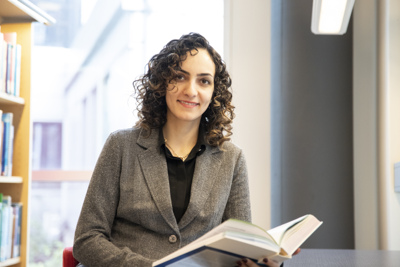
Farzaneh Etminani.
Farzaneh Etminani
Farzaneh Etminani currently works at CAISR Health within the ISDD department at Halmstad University, Sweden. In parallel, she serves as an AI strategist at the Department for Research and Development in Region Halland, Sweden. Her professional work bridges academia and the public sector, with a strong focus on applying artificial intelligence in real-world healthcare settings. Her research interests include data mining, algorithm development, and artificial intelligence, particularly in relation to healthcare innovation, decision support, and data-driven improvement of clinical and organizational processes.

Amira Soleman.
Amira Soliman
Amira Soliman is an associate professor of artificial intelligence and machine learning at Halmstad University, specializing in data science, graph analytics, and federated learning. Her areas of expertise include healthcare informatics, social network analysis, and distributed systems. Amira is teaching the courses of Artificial Intelligence for Healthcare, Smart Healthcare with Applications, Big Data Parallel Programming, Applied Data Mining, and Thesis supervision (MSc and PhD).

Grzegorz Nalepa.
Grzegorz Nalepa
Grzegorz J. Nalepa obtained his PhD in Computer Science from in 2004, with a dissertation titled “Meta-Level Approach to Integrated Process of Design and Implementation of Rule-Based Systems.” In 2015, he was appointed Docent at AGH University of Science and Technology. His academic achievements led to his promotion to Professor of Artificial Intelligence in 2019 by the President of the Republic of Poland. In 2020, he was further promoted to Full Professor at Jagiellonian University in Kraków, Poland. Most recently, in 2024, he was appointed Professor of Machine Learning at Halmstad University, funded by the ELLIIT Excellence Centre in Sweden.
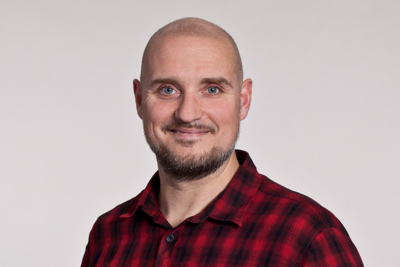
Jens Lundström.
Jens Lundström
Jens Lundström is a researcher and teacher in the domain of Machine Learning at Halmstad University. Specifically, he is interested in applied and theoretical ML research for improving healthcare, patient experience and quality of life. Moreover, Jens is the deputy department head at the Intelligent Systems and Digital Design (ISDD department). Currently he focus on research about explainable AI, representation learning and privacy-preserving machine learning.
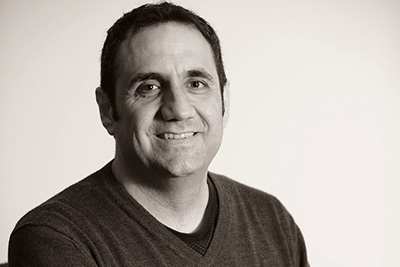
Juan Botía.
Juan Botía
Juan Botía is a Professor of Computer science and Artificial Intelligence at the University of Murcia, Spain and Honorary Research Fellow at the Institute of Neurology, University College London, United Kingdom. His research focuses on the application of Artificial Intelligence and Machine Learning to the study of RNA expression and the proteomics, epigenomics and metabolomics of neurological disorders like Parkinson’s disease. He teaches subjects related with machine learning and deep learning in Computer Science, Artificial Intelligence and Data Science BSc and MSc studies in University of Murcia.
Contact information
published
Updated
share