Students awarded for strategic case study with Getinge
Dinda Fitria Viranda, Ashween Saini, Ahmad Ahsan and Oana-Maria Stan identified a reoccurring issue in the annual report of the medical technology company Getinge, and came up with a solution and implementation plan to increase their financial results. This was a part of a case study challenge in the Master’s Programme in Industrial Management, where the students received a certificate of excellence for “Best Strategic Management Work”.
An exciting start of the programme
Strategic Planning is the first course in the Master’s Programme in Industrial Management and Innovation. As the students in this programme come from engineering backgrounds, this course is throwing them straight into the mindset of a strategist, which is both exciting and challenging, according to the student Oana-Maria Stan.
“It was so many new expressions and abbreviations that I had never heard about, so quite a steep learning curve, but very interesting to be able to understand the business side of an organisation”, says Oana-Maria Stan who previously studied Construction Engineering.
Course Coordinator Luís Irgang is a fan of the flipped classroom teaching technique where the students get preparational material before class, so that the lectures can be used for discussions, role-play exercisesand hands-on practice of the learnings.
In this specific course, Luis Irgang wanted to add some extra motivation for the students and prepared a case study together with the local but globally renowned medical technology company Getinge.
Getinge is one of Halmstad University’s strategic partners and around 70% of their employed engineers have been studying at Halmstad University.
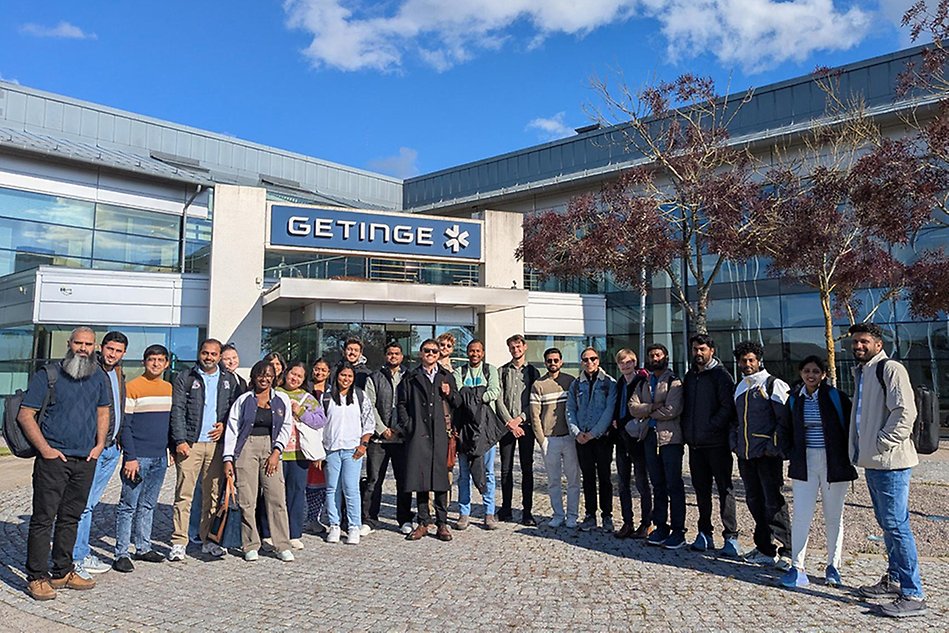
Students from the Master's Programme in Industrial Management and Innovation visiting the global medical technology company Getinge as part of the case study.
Intercultural groups acted as management consultans
The case started off with a study visit to the headquarters outside of Halmstad, where the students got an understanding of the organisation and production process. They were then given the task of acting as strategic management consultants for one of Getinge’s three business areas, based solely on the latest Annual financial report. The main goal was to identify an issue and connect it to one of the strategic management tools presented in the course.
The students were asked to create groups of 3-4 people, keeping diversity when it comes to gender, nationality and background in mind. This is part of Halmstad University’s curriculum, aiming to provide students with new perspectives and broaden their view within the specific subject.
Competition adds motivation
The students in the winning case group had previously worked together on a smaller task and decided to team up for this assignment, feeling extra motivated by the challenge including a real case, and the possibility to receive a certificate of excellence for “Best Strategic Management Work”.
“I could really see that the fact that the case study was turned into a challenge where the best team would be awarded, added some extra spark of motivation to the students”, says Luis Irgang and continues:
“Since this is the first course in the programme, I wanted to start off by setting the tone of the education and what’s to come. It’s not an easy task to start off with, but the students feel very proud when they manage to come up with a solution.”
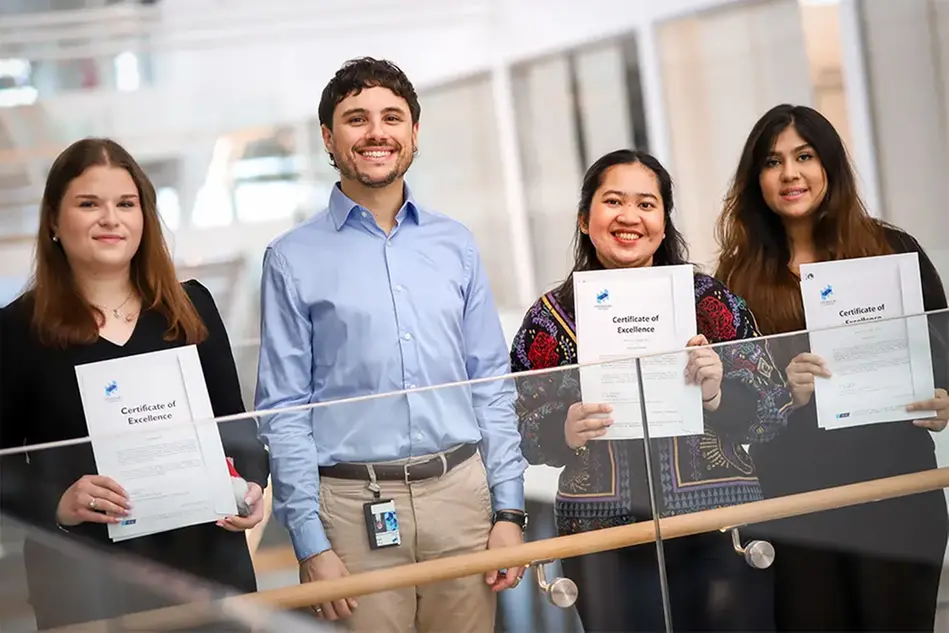
Awarded students Ashween Saini, Oana-Maria Stan, Dinda Fitria Viranda together with course director Luis Irgang Dos Santos.
Clear communication and thorough investigation – a winning concept
The winning team were awarded as they went beyond the original task to identify an issue and connect it to a relevant strategic management tool. In addition, they did a thorough investigation of the problem and provided both a possible solution and associated implementation plan.
When the group was asked about the reason behind their success, they all agreed.
“We had very good communication within the team and worked well together. We started off by brainstorming together, deciding which issue would be most interesting to look at. After that we used a ‘spinning-the wheel’-tool to divide tasks between each other to make the workload even”, says Dinda Fitria Viranda.
Ashween Saini adds that the challenge made the group work harder, knowing there was an award to chase.
“It feels very nice to be noticed and rewarded for the hard work we have put into this task, and this experience will be helpful when looking for companies to team up with during our upcoming thesis work”, she said.
