“Relationships are as important as resources” – the University and MSB test crisis preparedness
How can we quickly shift to local and circular production if a crisis hits and imports come to a halt? On 24 November, entrepreneurs, researchers, students and innovators gathered at Stena Recycling in Halmstad to explore possible answers through a hackathon. The initiative is part of a national project funded by the Swedish Civil Contingencies Agency (MSB).
“MSB’s involvement clearly signals that this issue is taken very seriously at national level. Their experience in crisis management is enormously valuable.”
Profesor Henrik Barth, Project Manager
How well prepared is Halland if a crisis occurs and the region must rely solely on its existing resources? Throughout an intense and collaborative day, participants worked on a confidential case based on real scenarios in Halland, where cooperation and circular thinking were crucial.
“A hackathon is an intensive and time-limited innovation process where participants with different areas of expertise work together to solve concrete problems. What makes this hackathon unique is its focus on supply preparedness and the way it brings together actors from the public sector, industry, academia and civil society”, says Henrik Barth, Project Manager and Professor of Innovation Science at Halmstad University.
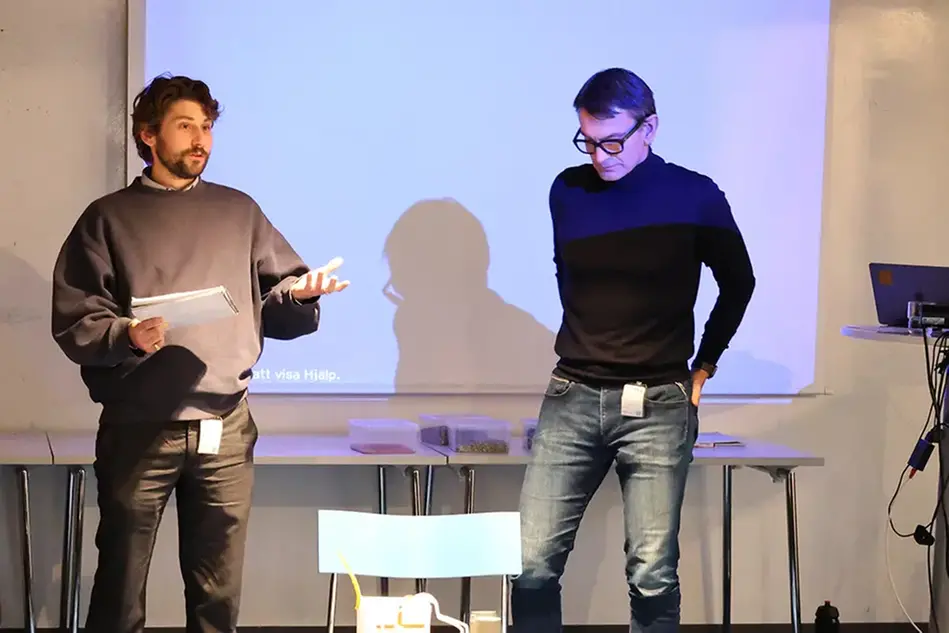
Henrik Barth (to the right) is Project Manager and Professor of Innovation Science at Halmstad University for the project.
Henrik Barth believes the format is well-suited to the challenges associated with supply preparedness.
“The format is particularly suitable because the issues are complex and demand quick problem-solving, multidisciplinary thinking and creativity. A hackathon allows us to test ideas rapidly, build prototypes and identify new solutions that might otherwise take months or even years to develop.”
A shared effort as challenges grow
Risks and disruptions in supply chains have become both more frequent and more complex. No single actor can address these challenges alone, but through collaboration they can share resources and expertise, develop backup solutions and strengthen societal resilience.
According to Henrik Barth, conducting the hackathon together with MSB provides both security and opportunities:
“MSB’s involvement clearly signals that this issue is taken very seriously at national level. Their experience in crisis management is enormously valuable. It also creates an environment where many actors feel that their perspectives matter and that we are genuinely working towards a shared goal. The need for collaboration is greater than ever.”
“Relationships are as important as resources”
When a crisis becomes reality, materials and equipment alone are not enough – human networks become essential.
“In a crisis, relationships are as important as resources. When actors already know one another, have established communication channels and understand each other’s capacities, they can act much more quickly. Co-creation enables solutions to be developed jointly and to gain broader acceptance, which strengthens both the ability to act and the legitimacy of the actions taken”, says Henrik Barth.
Henrik Barth hoped the day would result in both concrete ideas and new relationships.
“We developed tangible ideas that can now be taken further, and we built a shared understanding of what is required to strengthen supply preparedness in both Halland and Sweden. I believe many participants left with a sense of capability and confidence about the future.”
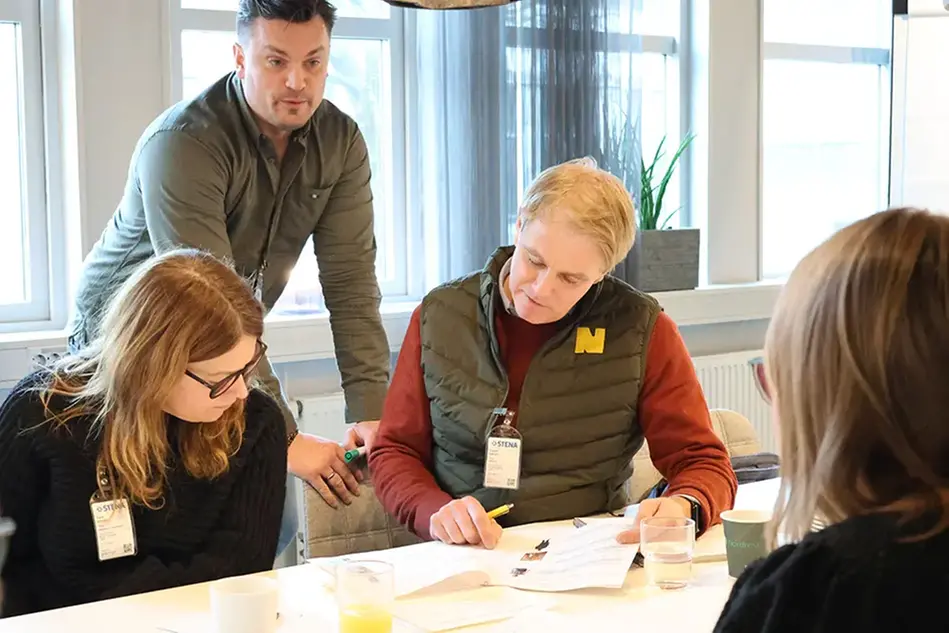
The task of the hackathon was to find solutions to Halland's supply preparedness.
Regional strength through collaboration
The fact that so many actors came together demonstrated a regional strength that extends well beyond Halland’s borders.
“It shows that Halland has both the ambition and the capacity to be a role model in Sweden. When industry, the public sector, academia and civil society work together, they create a regional strength that enhances preparedness and creates new opportunities for innovation. This strengthens Halland’s attractiveness and builds long-term resilience”, says Henrik Barth.
The results from the hackathon are being documented and shared nationally by MSB as part of the project Circular Supply Preparedness – Halland as a testbed for resilient supply chains.
Text: Anna-Frida Agardson
Photo: TEK Kompetens
More information
The research programme ProActS
About the hackathon
The initiative is part of the innovation project Circular Supply Preparedness, funded by the Swedish Civil Contingencies Agency (MSB). Halmstad University leads the project in collaboration with TEK Kompetens, Region Halland, Stena Recycling, The LOOP Factory and National.
