
Halmstad University and Region Halland join forces to boost AI expertise
Over 100 operational managers in Region Halland have taken part in training on artificial intelligence (AI) and its implementation. The programme was delivered in collaboration with researchers at Halmstad University and aims to equip managers with the knowledge to make strategic decisions about how to use AI responsibly within their organisations.
“We have discussed how AI is used in healthcare internationally, the obstacles that exist, and what is needed for the technology to actually work in practice.”
Jens Nygren, Professor of Health Innovation
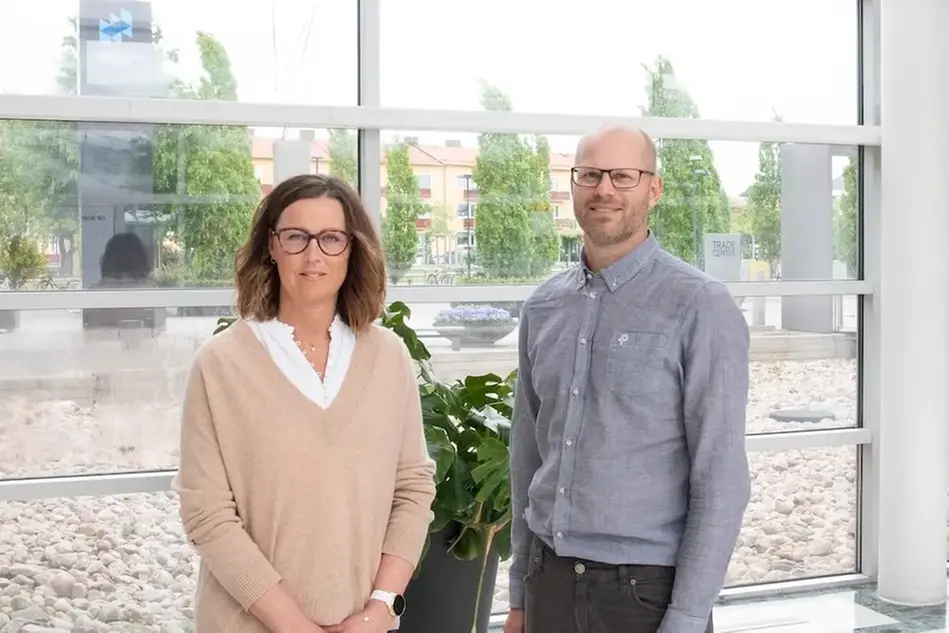
Managers and leadership teams from across Region Halland, spanning across healthcare, public transport and culture, participated in the training. The aim was to provide a deeper understanding of how AI impacts operations and how the technology can be applied responsibly in practice.
The training consisted of three parts. Participants were first introduced to AI and its role in societal development, with emphasis on both opportunities and risks. Next, the focus shifted to how AI can be implemented in a structured and responsible way, with researchers presenting international experiences and common challenges. Finally, concrete examples from Region Halland’s own innovation work were showcased, including the use of AI in care planning, diagnostics and administrative processes.
AI as a key driver
During the programme, the University researchers shared their work on structured and responsible AI implementation, focusing on how organisations can move from introducing isolated technical solutions to achieving sustainable systemic improvements.
AI is identified as a key driver in the development of future healthcare, but it requires the right expertise and structures to create real value in practice.
“We have discussed how AI is used in healthcare internationally, the obstacles that exist, and what is needed for the technology to actually work in practice”, says Jens Nygren, Professor of Health Innovation at Halmstad University.
The researchers also presented a framework and a digital process support tool designed to help organisations work more systematically with AI implementation.
“An important aspect has been questions on ethics, accountability and how organisations can translate experiences from individual projects into long-term improvements”, says Petra Svedberg, Professor of Nursing at Halmstad University.
Greater understanding to enable better decisions
From the researchers’ perspective, the aim was to enhance understanding of the challenges surrounding AI implementation and the importance of aligning technology with organisational needs.
It is hoped that the insights and perspectives discussed during the training will strengthen Region Halland’s continued efforts to use AI responsibly and in a value-creating manner. In the long term, this could contribute to more efficient, equitable and sustainable public services for the residents of Region Halland.
Region Halland emphasises the importance of educational initiatives to enhance organisational capacity in addressing AI-related matters.
“We hope the training will provide us with a broader and shared understanding of the opportunities and challenges that AI presents”, says Helena Eberhardsson-Nagy, Human Resource Specialist at Region Halland.
“The aim has not been for everyone to delve into every technical detail”, she continues, “but to create an overarching knowledge boost that strengthens our ability to hold strategic discussions at a leadership level. In the long run, we believe this will help us make better-informed decisions and collectively drive organisational development forward.”
Although the training has concluded, the work continues, and new initiatives are under discussion to further enhance the region’s ability to use AI responsibly and create value.
Text: Vilma Olofsson
Photo: Dan Bergmark
