Environmental Science Research Group
The research group in Environmental Science works to find nature-based and multifunctional solutions that can accelerate the transition to a more sustainable society. We conduct research and teaches about wetlands, biogas systems and environmentally friendly measures in agricultural landscapes. Our research is practice-oriented and often takes place in living labs, where researchers collaborate with farmers, authorities and other societal stakeholders to find solutions that are sustainable in the long term.
Education in Environmental Science
As a student in environmental science, you gain a broad foundation in natural and social sciences and are prepared to work strategically with the transition to a more sustainable society. Our teaching is closely linked to current research and takes place in collaboration with businesses, organisations and the public sector.
Bachelor’s Programme in Environment, Innovation and Sustainability
On the Bachelor’s Programme in Environment, Innovation and Sustainability (180 credits), you study our natural and environmental resources as well as the interplay between environment, people and society. This gives you a holistic understanding of global environmental problems and the ability to work strategically with sustainable transition.
Read more about the programme Environment, Innovation and Sustainability
Master’s Programme in Applied Environmental Science
On the Master’s Programme in Applied Environmental Science – Ecosystem Services and Natural Resource Management (60 credits), you specialise in ecology, nature conservation and sustainable water resource management, ecosystem services and the societal challenges we face in working towards a more sustainable future. Here you learn how research findings can be translated into practical solutions to counteract the overexploitation of natural resources and ecosystems.
The Environmental Science Research Group
Our research creates knowledge and solutions for the sustainable societal transition. We work with wetlands for climate regulation and water retention, develop industrial symbiosis within the biogas system and design nature-based solutions in agricultural landscapes. The research is practice-oriented and conducted in collaboration with farmers, businesses and authorities.
Wetland Research
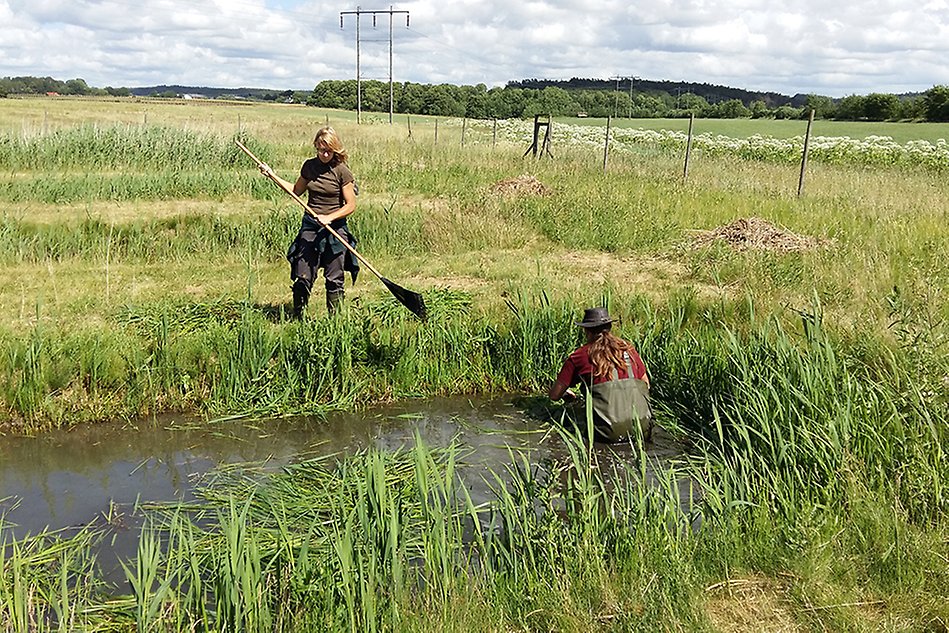
Here we develop criteria and methods for wetland design, construction and maintenance, particularly with regard to optimising nutrient retention and carbon retention. We study the role of wetlands as carbon sinks, for water storage and for climate regulation. We develop cost-effective assessment methods to evaluate the environmental benefits of wetland construction and restoration. In addition, we offer opportunities for teaching, learning and thesis work by providing expertise, equipment and facilities. In recent years, our collaboration with the drinking water provider Sydvatten has led to the recent focus on drinking water safety in our research. The potential for both deterioration and improvement of raw water quality through rewetting of old peatlands is an issue we are currently investigating.
Biogas solutions
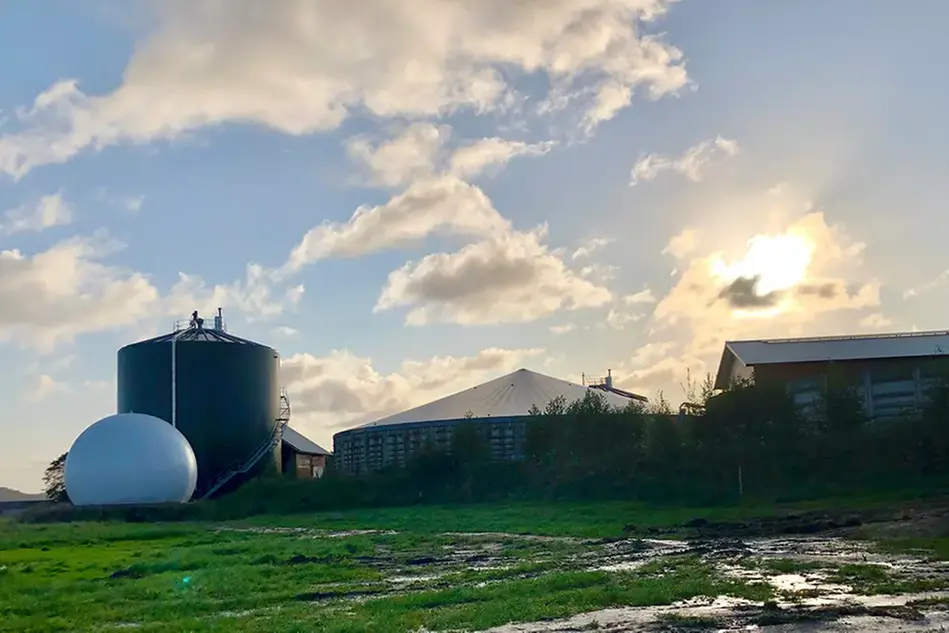
The production and use of biogas is a circular system that can contribute to energy supply, climate change and the circulation of plant nutrients. The biogas system connects cities and rural areas where both industrial actors and other organizations are involved to develop the full potential of biogas. Our research in biogas solutions has been ongoing for more than 10 years and includes both laboratory research on new substrates and substrate pre-treatments, as well as research on business model innovation. Our research is also about identifying obstacles and opportunities and analysing policies to be able to scale up biogas production in a sustainable way.
Industrial Symbiosis for Biogas
To capture all the values of biogas and develop the full potential of the biogas market, the biogas system needs to be developed to involve more industrial actors and other organisations, for example in the form of industrial symbiosis. Industrial symbiosis means that companies or other organisations collaborate and use each other’s residual flows, such as energy, water or materials as resources. It reduces climate impact, strengthens circularity, increases resilience and makes organisations more competitive. Our research conducted on industrial symbiosis in the context of biogas focuses on identifying drivers and obstacles for the development of symbiosis and mapping the actors, their roles and possible interactions within the system with the aim of facilitating and promoting the establishment, implementation and development of both existing and future symbiosis collaborations. We therefore involve business partners from different parts of the value chain who have an interest in developing the biogas market, sustainable business models and industrial symbiosis.
Naturebased solutions in the landscape
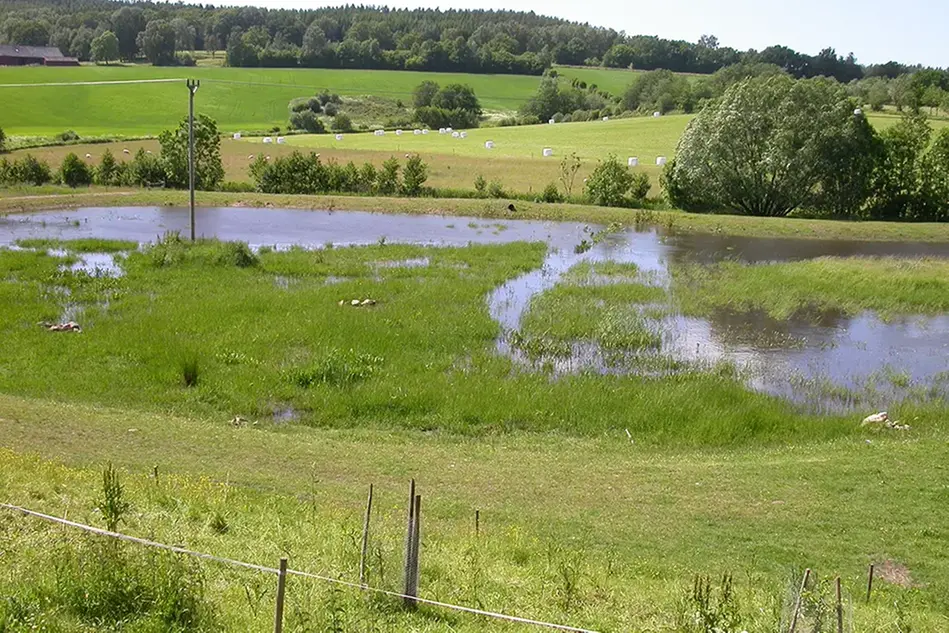
Nature-based solutions are measures that protect and strengthen ecosystems while offering solutions to important societal challenges. Our research in this area deals with how landscape elements can be recreated in the agricultural landscape to benefit connectivity, biodiversity and ecosystem services. We also asks questions about sustainable consumption and production of food.
From a landscape perspective, changes in the food system are linked to the design of the cultivated landscape and its ability to deliver ecosystem services. Furthermore, we study how ecosystem services can be valued, as part of the sustainable societal transition and in agricultural business models.
Value created locally has beneficial regional and often also global effects, and finding win-win solutions between companies’ profitability requirements and society’s sustainability needs becomes an important part of ecosystem conservation. By investigating how companies in rural areas can be supported in realising the values created from sustainable management of ecosystem services, recommendations for facilitation and policy work can be made. In this way, the research contributes to multidimensional solutions to several of the rural challenges linked to water resource management, nutrient cycles, food production and business development.
Nature-based solutions can also be designed to protect our communities from the impacts of climate change such as flooding and coastal erosion while generating various added values. Here, research can help evaluate possible solutions and find ways to implement them in practice.
Lab environments
The Rydberg Laboratory consists of a number of smaller units where both basic and applied research takes place:
- The Wetland Centre includes several research infrastructures such as (1) the Experimental Wetlands Area, which consists of 18 identical 24 m2 constructed wetlands, (2) a test bed for wetland restoration/rewetting and (3) a water chemistry lab.
- In the Bioanalysis Lab, biological and chemical analyses are carried out, including analysis of nutrient content in soils, tissues and water, as well as gas composition and microscopy.
- In the biogas test laboratory, different substrates are tested for assessment of biogas potential. The equipment consists of 16 reactors of 1,000 ml carbon dioxide capture and measurement of methane gas.
Staff in the Environmental Science Research Group
Anna Hansson, Lecturer External link.
Antonia Liess, Professor External link.
David Green, Senior Lecturer External link.
Henrik Andersson, Lecturer
Johanna Sjöstedt, Senior Lecturer External link.
Niklas Karlsson, External link.Senior Lecturer External link.
Marie Mattsson, Professor External link.
Martin Melin, External link.Senior Lecturer External link.
